
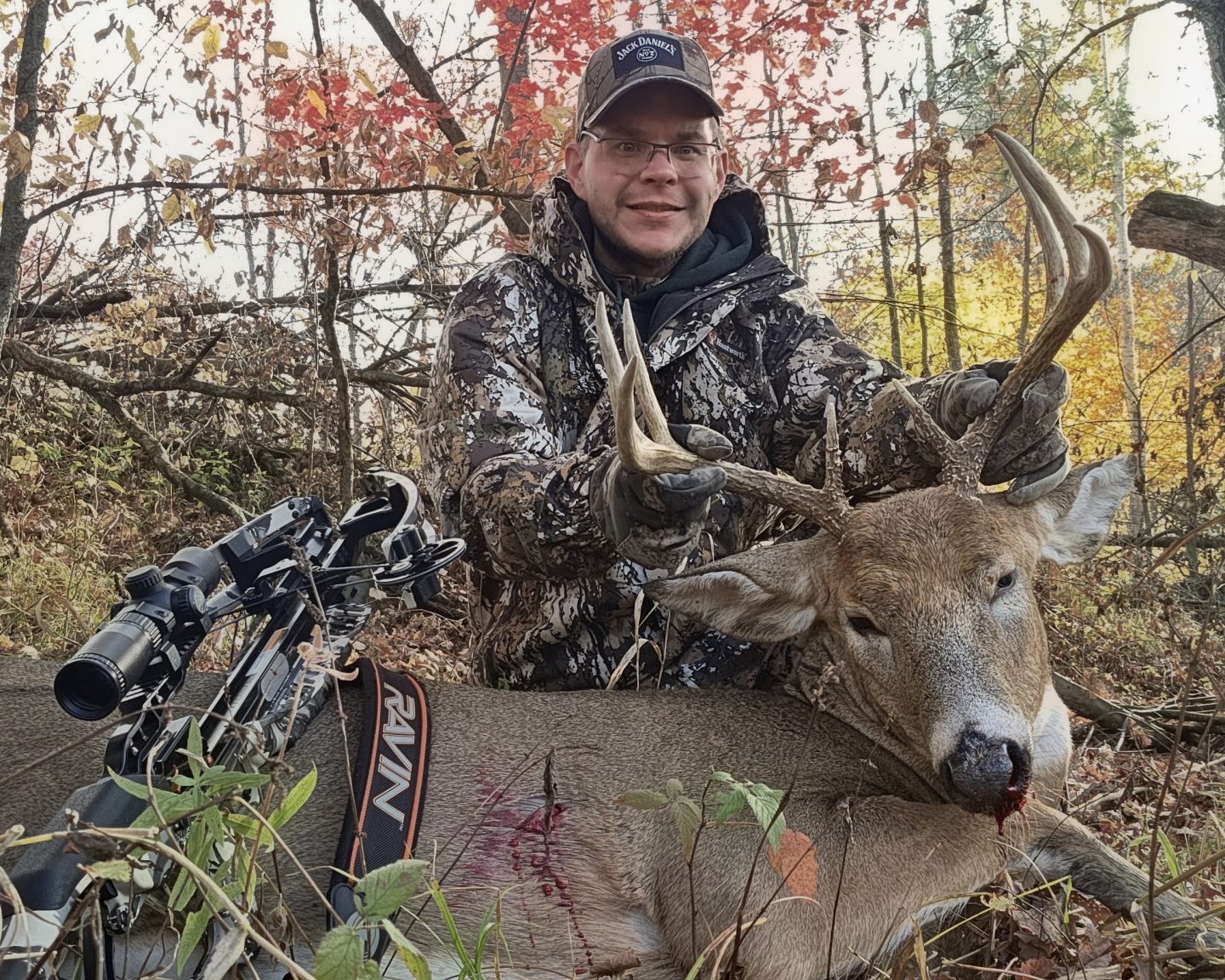

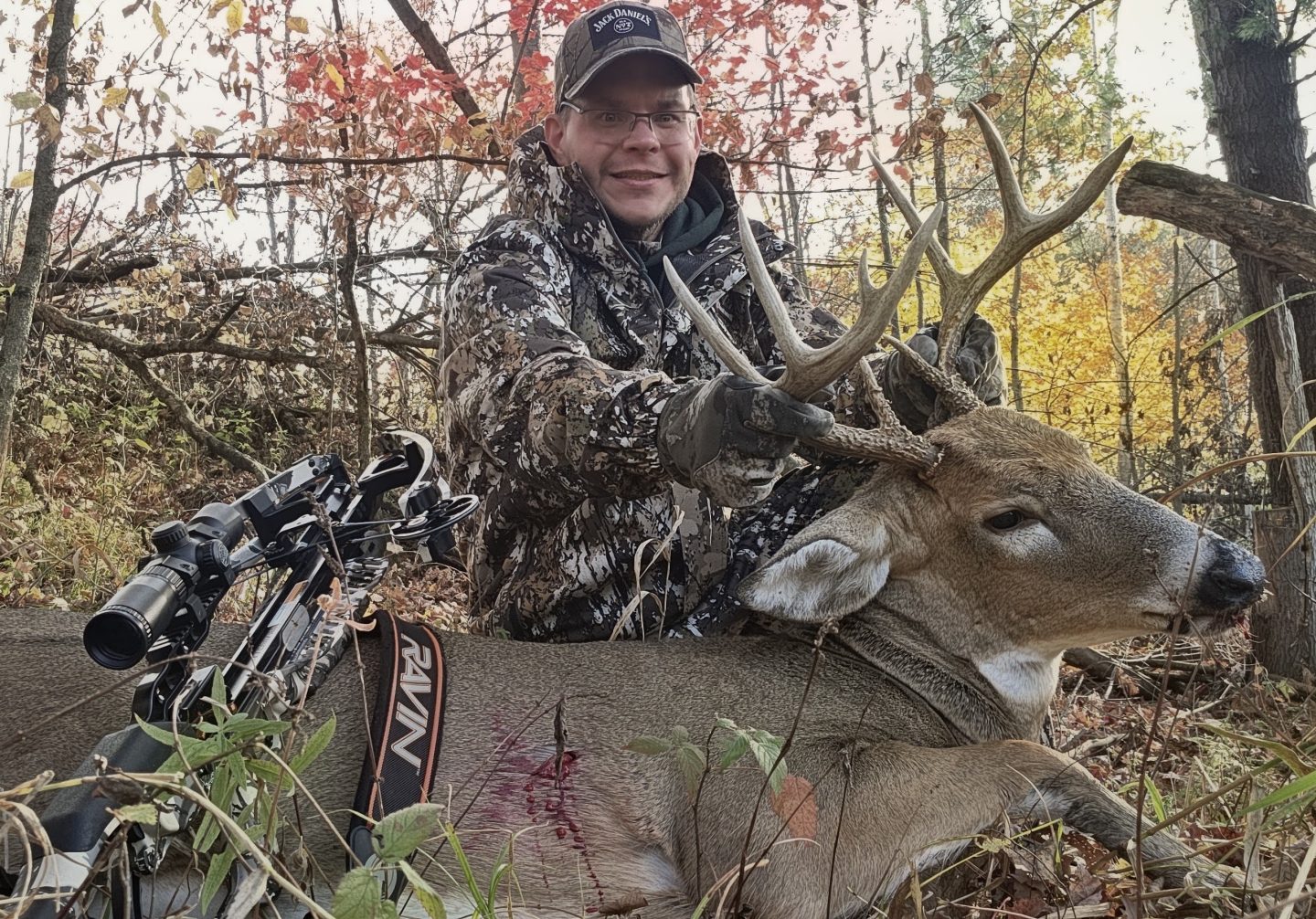
There is a rhythm to the whitetail woods that transcends seasons. For some, it begins with the frantic scouting of late summer; for others, it starts with the first sharp bite of frost on an October morning. But for me, the narrative of this autumn started back in April, anchored to a single ghost of a buck I had tracked, studied, and chased across the Kent County landscape for months. Until today, the closest I had ever been to him was 180 yards—a distant silhouette against the horizon, a phantom that seemed to exist just out of reach.
The afternoon of October 25, 2026, changed everything.
A strong southwest wind swept across the farm, and with the adjacent fields freshly chopped of their corn, my usual route to the stand was compromised. I had to adapt, altering my approach as I walked in for an early afternoon hunt. In the distance, my ground blind sat perched on top of a tall ridgeline, overlooking the quiet expanse of the lake below. A shallow ravine snakes its way from the ridge down to the lake bottom, acting as a natural highway—a biological funnel where deer transition effortlessly from the bedding areas in the swamp to the upper crop fields.
I hadn't even made it to the blind yet when the woods shifted.
Catching movement in the draw, I froze. There he was. All I could see at first were his heavy head, broad back, and dark rump as he worked his way down the ravine. My heart hammered against my ribs. I wasn’t even in position, and yet the target buck was walking straight toward me, completely unaware of my presence.
Two massive oak trees stood at the bottom of the ravine, a natural gateway he had to pass behind. Dropping instantly to one knee, I tracked his descent. He moved with casual arrogance, stopping every few steps to check the wind and crunch on fallen acorns. With the swirling breeze blowing directly into my face, he finally cleared the oaks, stepped cleanly onto the trail, and paused broadside.
There was no time for rangefinders, no time for overthinking. In my head, a single instinctual number echoed: Fifty.
I shouldered my crossbow, locked my 50-yard crosshair right behind his shoulder, and squeezed the trigger.
THWAP!
That unmistakable, hollow thunk of a lethal hit shattered the afternoon silence. No bone, no crack, no erratic deflection—just pure, surgical perfection. He exploded forward with a violent mule kick and vanished into the brush like lightning, crashing through the cover just over a small knoll.
I walked over to the spot where he had been standing and ranged it: 52 yards.
When I reached the point of impact, the validation was instantaneous. Bright blood and coarse hair painted the ground—a trail a blind man could have followed. Tracking him just sixty yards over the knoll, I found him lying quietly in the lake bottom.
At 46 years old, after 34 years of chasing whitetails, this is my biggest archery buck to date. Every animal taken fills me with profound gratitude and humility, but this one carries a different weight entirely.
As I stood there in the quiet stillness of the Kent County timber, looking down at the magnificent animal, a sudden, overwhelming warmth settled over the woods. Someone was with me today. It felt as though my grandfather or uncle were standing right there beside me in the timber again—maybe even both. They shaped the hunter and the man I am today, instilling a deep reverence for the land and the chase every single chance we got.
It has been a few years since they passed on, leaving empty seats at camp and quiet trucks on early morning drives. But out there in the timber, wrapped in the crisp October air, their spirits didn't feel gone at all. They were right there in the crunch of the leaves, the whisper of the wind through the oaks, and the deep, abiding joy of a well-earned harvest. The names and faces change, and the seasons turn, but the lessons passed down across the generations never die. Long after our hunting partners leave this earth, they remain an unyielding part of every successful hunt, walking quietly beside us in the shadows of the ridge.


More Info Coming Soon.